

EXCLUSIVE
Most People Think Moissanite Is “Fake”... We Wanted to See If That’s Actually True
By Melissa Pischner
May 20, 2026
I'll admit it: when my partner first floated the word "moissanite," my brain heard "fake." I'd been raised on the idea that a "real" engagement ring meant a mined diamond, ideally one with a price tag that made you wince twice (once at the jeweler, again at the credit card statement). Anything else felt like a costume.
So I did what any skeptic does... I started reading. What I found completely rearranged the way I thought about engagement stones, to the point where I almost feel embarrassed at how confidently wrong I was.
Wait, What Actually Is Moissanite?
Here's the part the old school jewelers will never tell you.
Moissanite has one of the more fascinating origin stories in fine jewelry.
In 1893, French chemist Henri Moissan was studying rock samples from a meteorite crater in Arizona. Inside the fragments, he found tiny crystals so hard and so brilliant that he initially believed they were diamonds.
They weren’t.
They were silicon carbide, an exceptionally rare mineral that barely forms naturally on Earth. Moissan later won the Nobel Prize in Chemistry, and the mineral took his name.
That is why moissanite is sometimes called a “gemstone from the stars.” But the stones used in engagement rings today are not mined from meteorites. They are grown in controlled lab environments, which makes them more consistent, more accessible, and far more suitable for fine jewelry.
It is a real gemstone, not a "simulant" in the cubic zirconia sense.
One thing worth knowing before you buy: unlike diamonds, moissanites have no universally recognized grading institute. The GIA and IGI grade diamonds. There is no GIA equivalent for moissanite. Some sellers will hand you an official looking certificate from a lab you've never heard of, and those documents are mostly marketing theatre. What matters far more is the seller's reputation and whether they offer any type of Lifetime Warranty on their stones. Skip the certificate hype and judge the seller.
I checked with Anna Wilson, a GIA-trained gemologist (who has spent 18 years evaluating engagement ring stones) before writing this, partly because I needed to hear it from someone who handles stones every day, not from a brand. Her summary, almost verbatim: "It's not a knock off. It's its own category. People keep trying to compare it to a diamond, but optically, it's a different conversation entirely."
That sentence is what flipped me from "fake" to "fascinated."

My Experience With Moissanite
As someone who'd spent months agonizing over the "right" engagement stone, ping ponging between guilt about mined diamonds and a vague sense that any lab-made stone would feel like cheating, I was, frankly, exhausted. I'd been curious about moissanite for a while and decided to actually try one before writing it off.
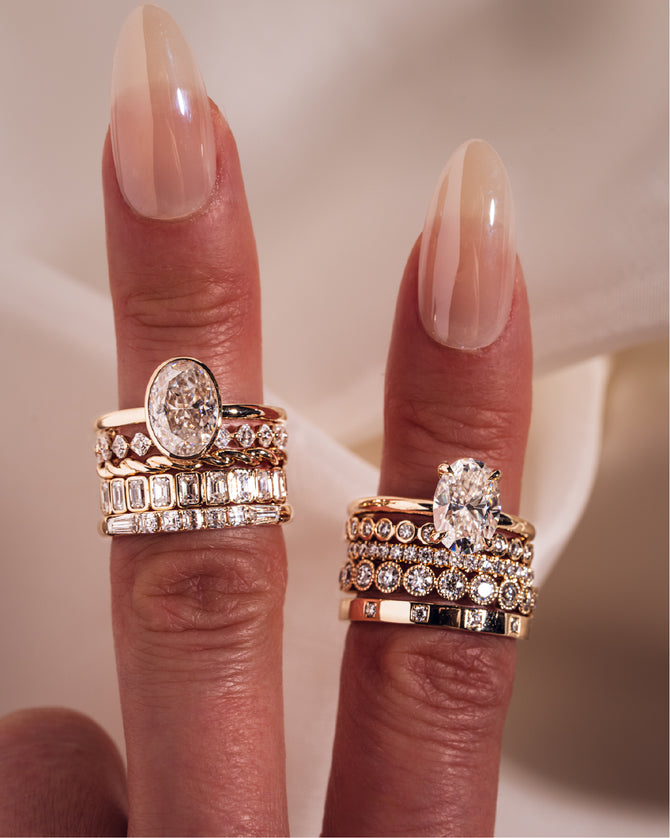
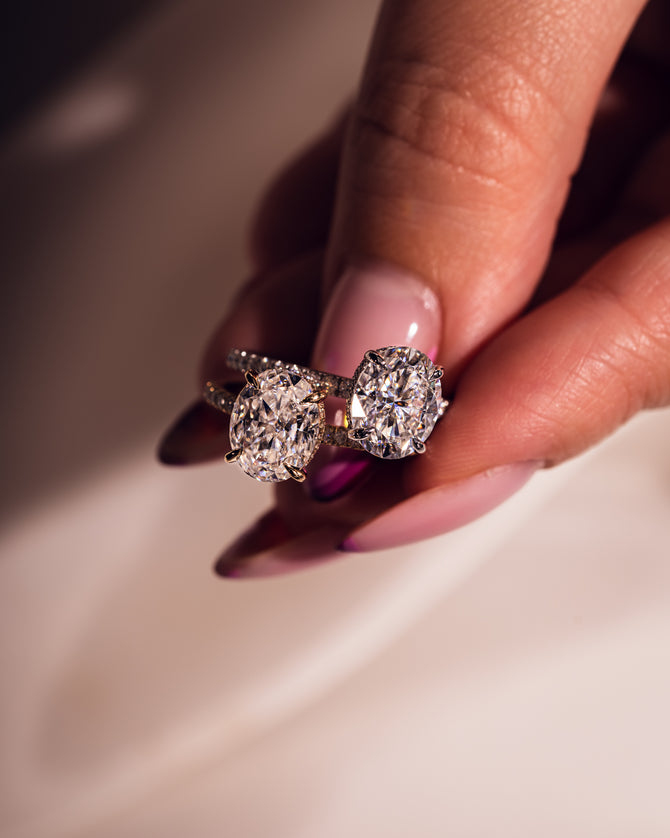
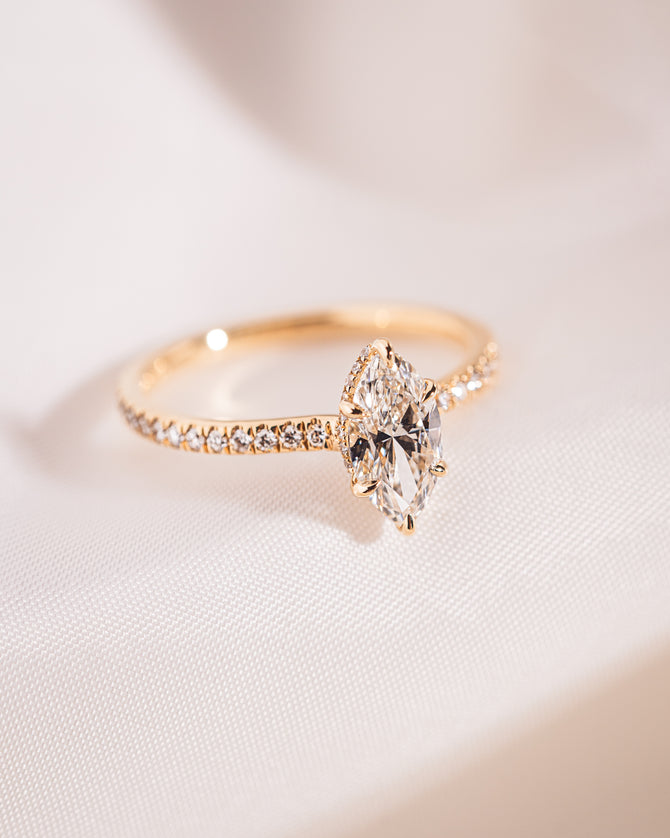
On first wear, I appreciated how the stone felt almost startlingly familiar from the cut, the weight, the way it caught light when I moved my hand... none of it felt like a compromise. It felt like a ring. I loved that within an hour of putting it on, I'd stopped thinking about it as "the alternative" and started thinking about it as mine. The first real test was painless too, there were no awkward conversations, no one squinting at my finger... just compliments from a friend over coffee who asked where it was from.
Over the course of several weeks, I started to notice subtle things. Around the three week mark, I realized I'd worn it through pilates, the shower, a beach day, and cooking dinner most nights, and it still threw the same sparkle across the kitchen ceiling when the light hit it just right. By the six week mark, two people had asked about my "diamond" and one had asked if it was vintage. I still notice the rainbow flash, but it's grown on me, almost like a signature. The ring stopped feeling like a decision I had to defend and started feeling like one of the more beautiful and practical choices I've made.
The Science: Why Moissanite Sparkles Differently
Once you look at the numbers, the snobbery starts to feel a little silly.
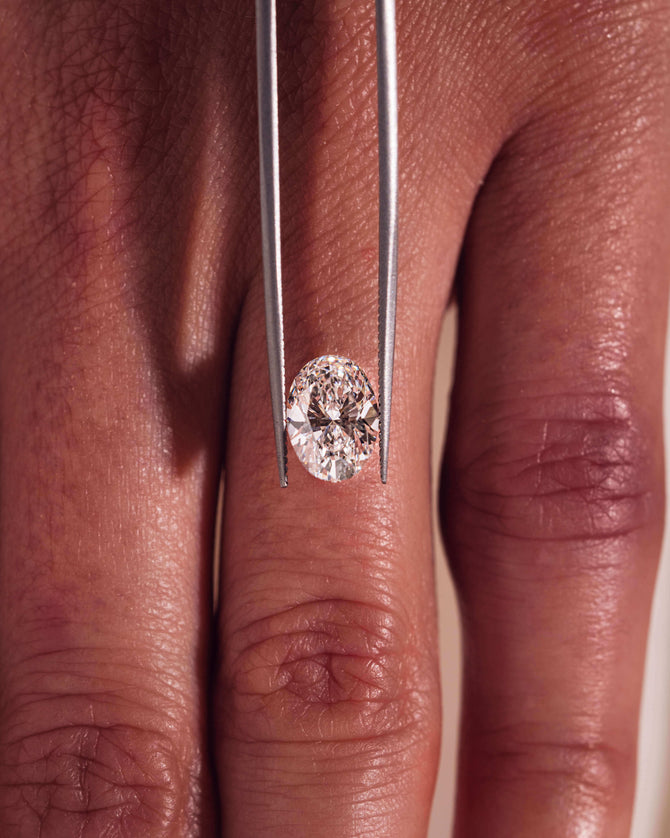
Moissanite's refractive index, the technical measure of how much a stone bends light, is 2.65, compared to a diamond's 2.42. Higher refractive index means more sparkle bouncing back at you. Its dispersion rating (the "fire," or rainbow flashes) sits at 0.104, which is roughly 2.4 times higher than diamond's 0.044. In plain language: in direct sunlight, a moissanite throws colored light around like a tiny disco ball. A diamond throws back crisp white light. Neither is wrong. They're just different performances.
On hardness: diamonds rank a 10 on the Mohs scale and moissanite ranks 9.25, which makes moissanite the second hardest gemstone used in fine jewelry. For context, sapphires sit at 9. Moissanite is built to be worn every day for the rest of your life and not show it.
And the price gap is genuinely staggering. A one carat moissanite typically runs $700 to $800, while a comparable natural diamond runs $4,000 to $8,000. Same finger, same sparkle profile (arguably more), 80 to 90% less spend.
If You're Still Reading, You're Already Curious
You don't have to commit today. But if any part of this is making you reconsider the $6,000 you were about to drop at the jewelry counter, do yourself one favor: request a side-by-side video comparison from a moissanite specialist before you buy a diamond. Most reputable sellers will send you one for free. Watch it in daylight. Watch it under a lamp.
See a real moissanite under real light →
What Owners Actually Say (After Years of Wearing It)
I went deep on owner reviews; verified buyers, multi-year wearers, the kind of people who have nothing left to prove. Four themes came up over and over.
The compliments don't stop. The most common phrase I saw, in some form, was "everyone thinks it's a diamond." Owners describe strangers complimenting their ring at the grocery store, coworkers asking how many carats, in-laws who never figured it out. A 15-year wearer wrote that she'd planned to "eventually upgrade to a real diamond" and never did, because she liked her moissanite more.
The ethical relief is real, and it lasts. This one surprised me. I expected ethics to be a one-time talking point, but for owners it shows up years in; relief that no mining was involved, no conflict supply chain, no anxiety about provenance. Several said this alone made the ring feel more meaningful, not less.
It passes the everyday test. Owners report wearing it in the shower, the gym, the ocean, while gardening, while doing dishes; and reporting back, sometimes a decade later, that it still sparkles like the day it arrived. Moissanite doesn't cloud, doesn't yellow, doesn't lose fire.
The money you saved actually changes things. This is the quiet theme nobody talks about in ads. Owners describe what they did with the $4,000–$7,000 they didn't spend: a down payment, a honeymoon, the wedding itself, paying down a loan, an emergency fund. The ring sparkles. So does the bank account.

The Honest Drawbacks
I told you I'd be straight. Three things to know before you buy:
The rainbow fire is a love-it-or-side-eye-it situation. Moissanite's higher dispersion means it throws more colored sparkle than a diamond in bright light. Most people find this beautiful, even thrilling. A small minority find it "too flashy" or feel it reads as obviously not-a-diamond in direct sun. If you want a stone that whispers, you may want to look at smaller carat sizes or a halo setting that diffuses the effect.
Resale value is low. A natural diamond will hold maybe 30% of its value on the secondhand market. A moissanite will hold very little. If you think of jewelry as an investment vehicle, this is a real downside. (If you think of jewelry as something you wear and love, it's a non-issue.)
Quality varies wildly between sellers. Cheap, uncertified moissanite from mystery sellers can have gray or green undertones, dull cuts, or poor settings that lose stones. Stick with named brands, ask for certification, and read the fine print on warranties before clicking buy.
So, Is Moissanite Actually Worth It?
Here's where I landed, after weeks of research, conversations with a gemologist, and reading the long-form reviews of people who've worn theirs for over a decade:
Yes; for the right person. If you want maximum sparkle for minimum spend, if ethical sourcing matters to you, if you'd rather put your money toward a house or a honeymoon than into a stone's resale value, moissanite is one of the most quietly intelligent purchases in modern jewelry.
Maybe not; if you specifically want the diamond market. If your identity is tied to owning a mined diamond, if resale matters, or if even one person at a dinner party clocking your stone would bother you; buy the diamond and don't look back. There's no wrong answer here, just an honest one.
Quick Comparison: Moissanite vs. Lab Diamond vs. Natural Diamond vs. CZ
Material
Origin
Mohs hardness
Refractive index
Fire (dispersion)
1ct price (approx.)
Everyday durability
Ethical sourcing
Resale value
Best for

Moissanite
Silicon carbide
Lab-grown (originally meteoric)
9.25
2.65–2.69
0.104
$700–$800
Excellent
Fully traceable
Low
Maximum sparkle, ethical spend

Lab Diamond
Pure carbon
Lab-grown
10
2.42
0.044
$1,500–$2,500
Excellent
Fully traceable
Low–moderate
Diamond look, lower cost

Natural Diamond
Pure carbon
Mined
10
2.42
0.044
$4,000–$8,000
Excellent
Varies by supplier
Moderate
Tradition + resale

Cubic Zirconia
Zirconium dioxide
Lab-grown
8–8.5
2.15–2.18
0.058–0.066
$20–$80
Poor (clouds in 1–3 yrs)
Fully traceable
Negligible
Costume / temporary use
Final Thoughts
I started this writing as a skeptic and ended it wearing one.
Most people don’t start out curious about moissanite. They start out suspicious of it.
Is it fake? Will people know? Is it just a cheaper diamond substitute?
Then they learn what it actually is, see it in person, compare the numbers, and the question starts to change. Not “is this fake?” but “why was I so ready to dismiss it?”
If a year from now you're still happy you saved $5,000, getting compliments and loving the ring (every long term owner I read says you will be) then the only thing left to ask is why the world spent a century convincing us there was only one right answer.
Take the next step at your own pace. Request a side by side video, order a loose stone to inspect at home, or browse moissanite engagement settings from a seller with strong return policies before you make any decision.
The ring should feel right on your hand, within your budget, and in the life you are actually building together.


