

Crushed Ice vs. Brilliant Cut: The Definitive Sparkle Comparison
Translation missing: fr.9oyyw8ak7i.lh_k4lsmw_desc
Translation missing: fr.1bm8b92q6cr.lh_4mruur_title
For discerning customers who prefer the look, appeal, and affordability of lab-grown moissanite stones, the choice between these cuts often impacts the shape of the cut and its distinctive appearance.

Crushed Ice Cut
The crushed ice cut minimized the “disco ball” effect in all shapes it is offered in, a barrier for diamond lookalike seekers.

Brilliant Cut
The brilliant cut is often referred to as a “classic” style, easily recognizable by its sparkle and beauty. Designed with symmetrical facets carefully arranged to maximize light refraction and reflection, the brilliant cut shows off the exquisite nature of the inlaid diamond. It draws the eye, showcasing the fire and brilliance of the stone.
Brilliant vs Crushed Ice

Translation missing: fr.cz29kaso7vd.lh_vm6s8d_title
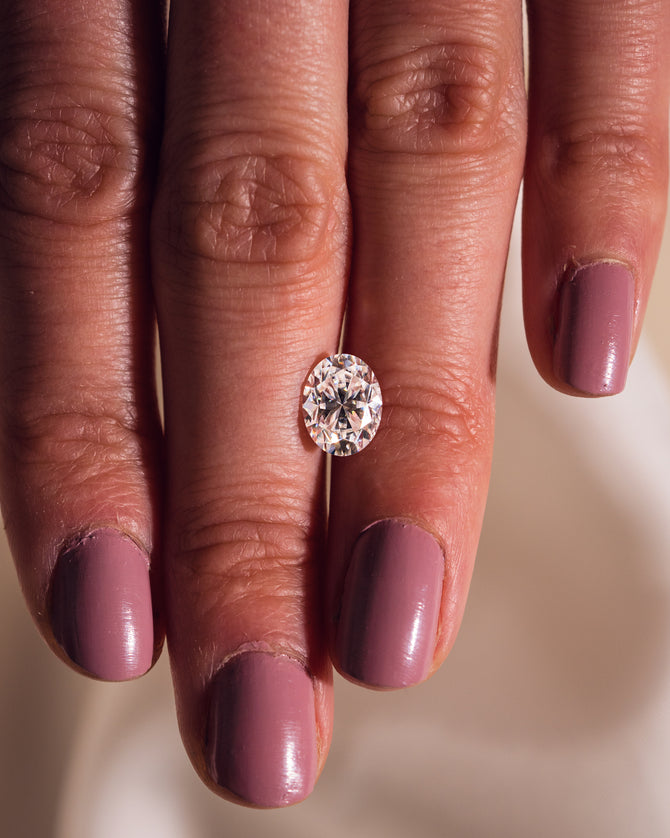
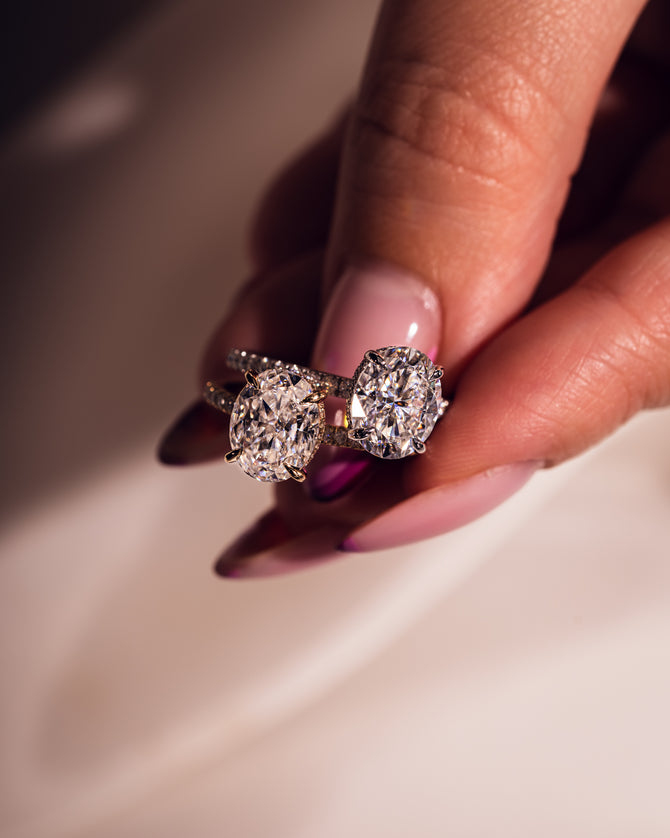
It’s the gemstone cuts themselves that make them highly sought and visually striking. Crushed ice has a “chaotic” look that initially appears less organized, but this is due to the way light enters the gemstone, scattering in various directions and creating a truly unique yet less uniform appearance.
When comparing the two, potential customers must consider the overall visual impact and presentation. A brilliant cut might offer a superior brilliance, making it an excellent choice for those pursuing a classical display of the stone that reflects light with inordinate beauty. Brilliant cut gemstones regularly appear in engagement rings and other pieces of commercial fine jewelry, due to their attractiveness and familiarity.
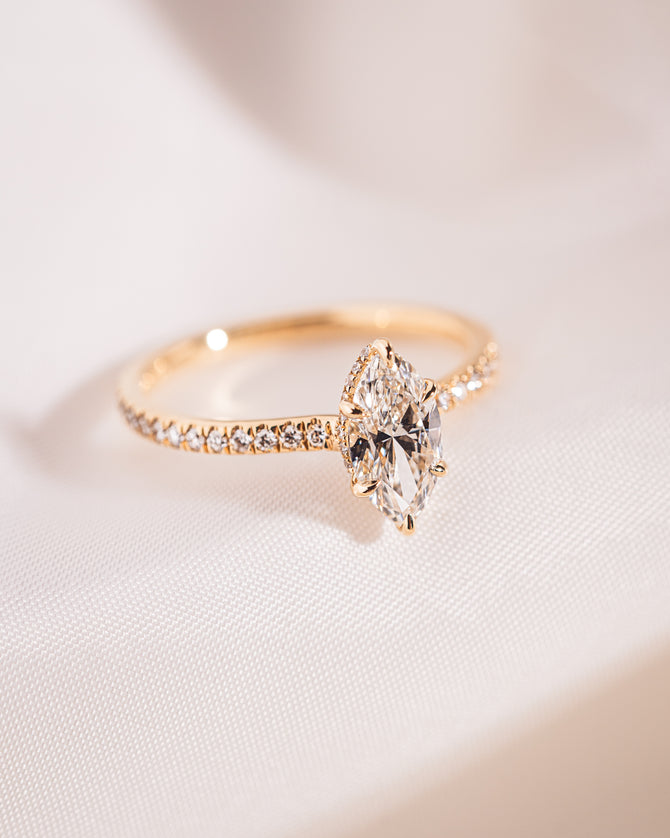
Exploring the differences between these cuts reveals the particular facets that remain unique to elongated shapes. Both brilliant and crushed ice cuts completely minimize the “dark area” that appears in the center of certain stones, minimizing the appearance of what is named the “bowtie effect” or “dark bowtie” due to their unique facet patterns.
To summarize here, the selection of brilliant cut and crushed ice must be weighed by visual impact and personal preference. The distinct beauty and allure of each cut make the gemstone stand out in its own way, whether you prefer something fiery, sparkly, and precise or something subdued, natural, and distinct.

Analysis and Characteristics
Brilliant cuts are designed to maximize light refraction and reflection due to the many facets in the stone. The fiery sparkle and brilliance displayed by this cut make this gemstone stand out. Brilliant cuts have a “natural” feel, easily recognizable by those seeking a modern ideal of beauty. This makes this cut feel traditional and comforting, perfect for those seeking classical elegance.
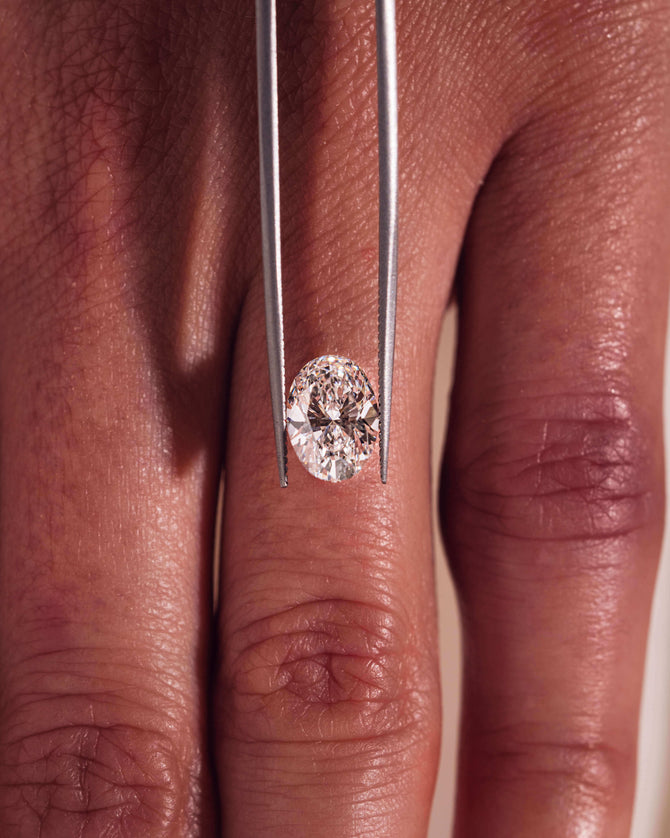
Crushed ice moissanite has more intricate patterns, as its facets are designed to create a dazzling effect that may look “glittery” to some. It may lack the level of fiery brilliance of the brilliant cut, but it creates its own depth and mesmerizing sparkle. The uniqueness of the crushed ice finish is perfect for those seeking a more contemporary and distinctive look.
The choice between the two styles may be more fitting depending on the person and the desired look of your jewelry piece.
Which Cut Is Right For Me?
Frequently Asked Questions
Lorem ipsum dolor sit amet.
What’s the difference between crushed ice and brilliant cut stones?
What has the better sparkle, crushed ice or brilliant cut?
What’s more appealing, crushed ice ovals or brilliant cut ovals?
Is crushed ice moissanite different from diamond?
You Might Also Like

20 août 2026
Wondering how much to spend on an engagement ring? Learn how to set the right budget, compare options, and maximize value with lab diamonds and moissanite.

29 juil. 2026
Discover everything you need to know about oval engagement rings, including ratios, styles, settings, sizing, sparkle, and expert buying tips.

23 juil. 2026
A Complete Guide to Finding the Most Flattering Engagement Ring. In this guide, we'll walk you through the best engagement ring shapes for every finger type, explain which shapes appear larger or more elongated, and share tips to help you choose the perfect...

23 juin 2026
Wondering if people can tell whether your engagement ring is a lab diamond? Learn how lab-grown diamonds compare to natural diamonds and why they're visually identical.

22 juin 2026
Comparing moissanite vs lab diamond prices? Discover how much money you can save, what affects the cost, and which option offers the best value for your engagement ring.


